• Skip to primary navigation
  • Skip to main content
  • Skip to primary sidebar
  • Skip to footer

Adamant Living

Tools for Living Your Best Life

  • Homepage
  • About Us

Herbal Medicine

Calendula Body Butter

April 3, 2023 by Ashley Adamant 2 Comments

This post may contain affiliate links. Read full disclosure here.

Calendula body butter is a luscious way to nourish your skin with the natural healing benefits of calendula.

Calendula Body Butter

Calendula is one of the best herbs for home skincare, and it nourishes skin, both inside and out.  It’s often used in herbal preparations like calendula tea, but it can also be used topically in salves, creams or this luscious and deeply nourishing calendula body butter.

This natural recipe for calendula body butter comes from Herbal Revolution by Kathi Langelier.

Herbal Revolution Book Cover

Reprinted with permission from Herbal Revolution by Kathi Langelier. Page Street Publishing Co. 2020. Photo credit: Erin Little.

Whipped Calendula Body Butter

I used to make a lot of lotions when I started making body products, but when I became a massage therapist, I switched over to making body butters. I preferred the creamy, light texture and richness of a whipped body butter, and because it doesn’t have a water element, it’s more shelf stable.

Body butters can be made out of any infused oils, and this recipe uses calendula oil. Calendula is anti-inflammatory and soothing, making this thick and luscious butter wonderful for dry, cracked skin and rashes.

Calendula Body Butter

Calendula Body Butter

Calendula Body Butter
Ashley Adamant

Calendula Body Butter

Body butters can be made out of any infused oils, and this recipe uses calendula oil. Calendula is anti-inflammatory and soothing, making this thick and luscious butter wonderful for dry, cracked skin and rashes.
Print Recipe Pin Recipe
Ingredients Equipment Method Notes

Ingredients
  

  • ½ oz 14 g cocoa butter
  • 2 oz 56 g shea butter
  • 3 oz 85 g Calendula Oil
  • 1 tsp rose hip oil
  • 1 tsp vitamin E oil

Equipment

  • Digital scale
  • Small pan
  • Strainer
  • Hand mixer
  • 4 (2-oz [60-ml]) or 8 (1-oz [30-ml]) jars, for storage

Method
 

  1. Using the scale, weigh out the cocoa butter and shea butter and melt in a small pan over low heat.
  2. Place the oils in a bowl. Once the butters have melted, pour through a strainer into the bowl. Use a hand mixer to blend the ingredients together. Start slowly on low speed and work your way up to high speed, and whip for 1 to 2 minutes. Then place the bowl into the freezer for about 10 minutes.
  3. Take the bowl out of the freezer and scrape down the sides with a spatula. Then mix again with the mixer, again starting on low speed and working your way up to high speed. Mix for about 1 minute. If the cream is still liquid or really soft, put the bowl back in the freezer for 5 minutes. Take it out again, then scrape and mix. If still a liquid, place back in the freezer for another 5 minutes.
  4. Repeat this process until you have a nice whipped cream consistency. If the cream ends up in the freezer for too long, it will become too hard. So, what you can do then I slowly drizzle in more calendula oil as you whip it with the mixer. Keep adding until you achieve the consistency you like.
  5. Scoop the mixture into four 2-ounce (60-ml) or eight 1-ounce (30-ml) containers. The body butter can be stored at room temperature, out of direct heat or sunlight.

Notes

To Use: This body butter is lovely to use on any rough or dry skin and rashes. Take a small pea-sized amount and gently rub into the skin. Use as often as needed.

Calendula Recipes

Looking for more ways to use Calendula?

  • Calendula Tea
  • Lotion Bars
  • Homemade Calendula Oil
Calendula Body Butter Recipe

Filed Under: Herbal Medicine, Herbalism

Violet Skin Cream (for Lymphatic Health)

March 27, 2023 by Ashley Adamant Leave a Comment

This post may contain affiliate links. Read full disclosure here.

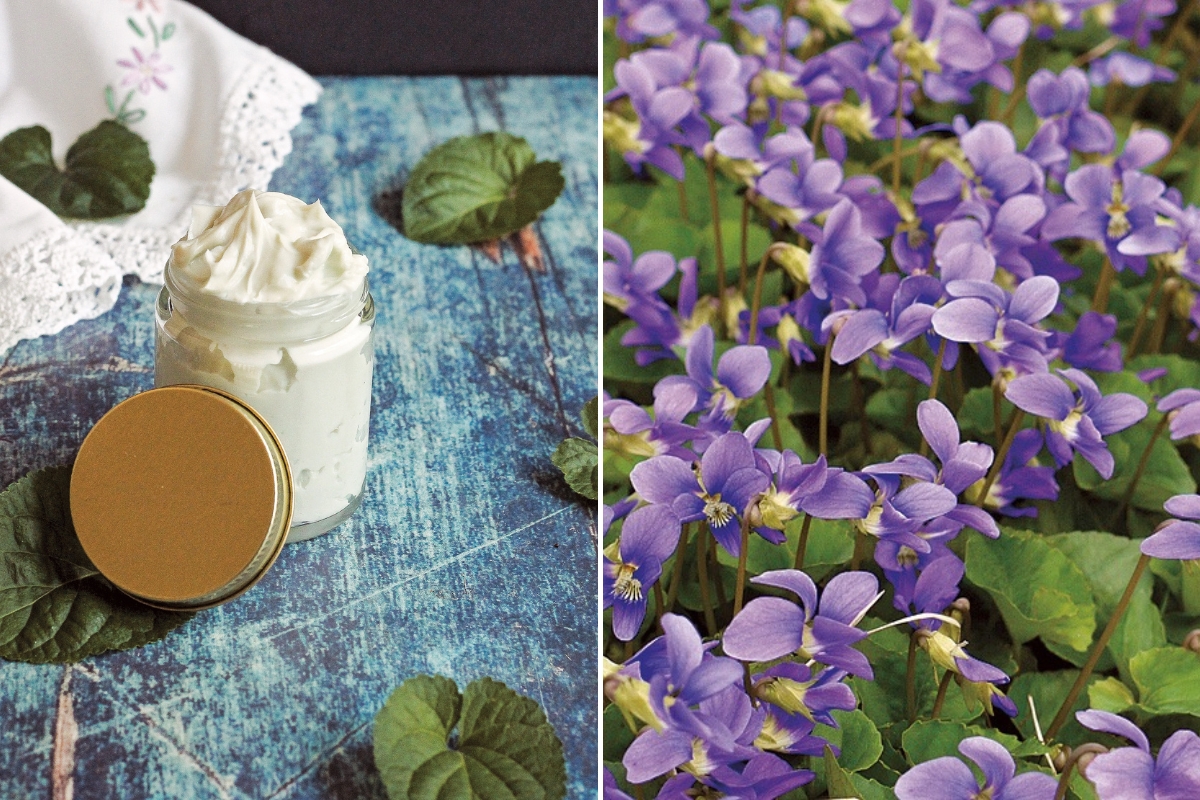
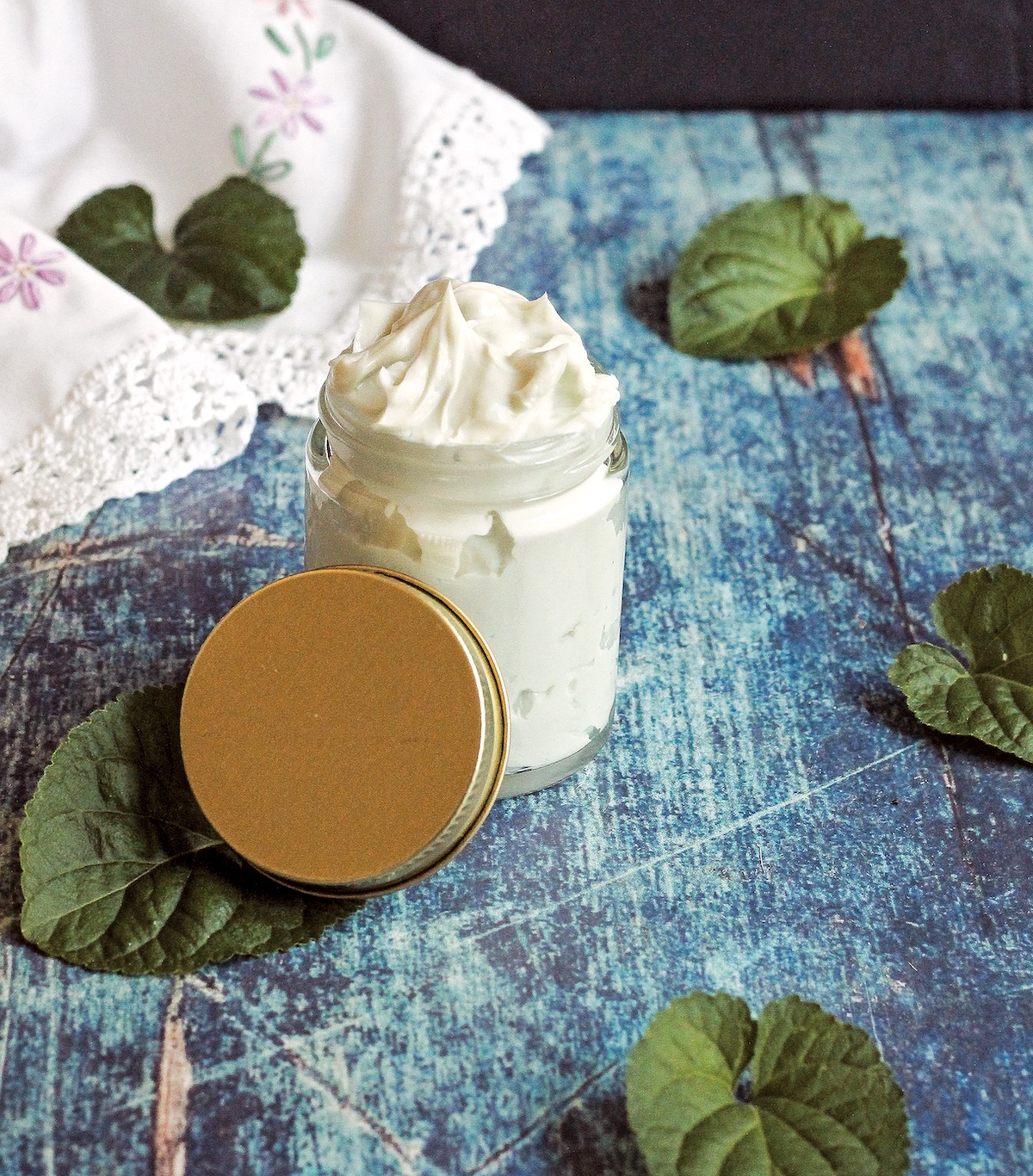
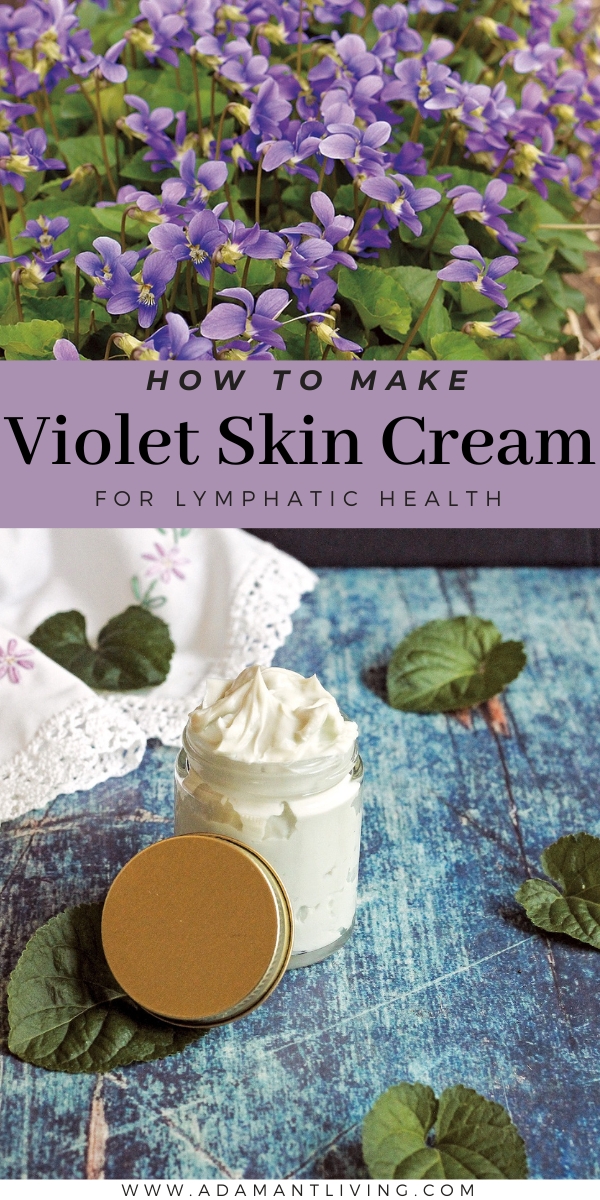
Violet skin cream is a natural herbal remedy that promotes lymphatic health.  While most violet remedies use flowers, this one actually uses violet leaves.

Wild Violet Leaf Skin Cream

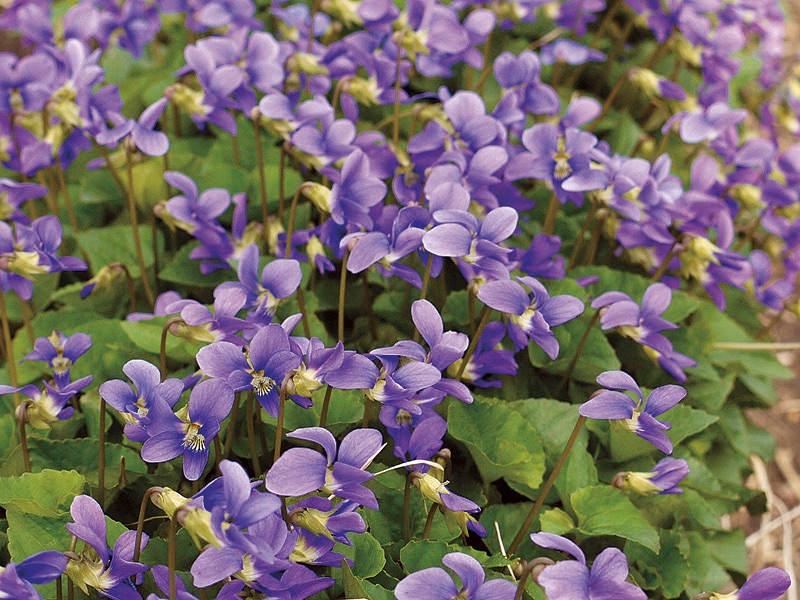
Wild violets are a welcome sight each spring, brightening up every corner of the yard.

The beautiful purple flowers are edible, and they make a delightful violet jelly.  The leaves are also edible, and they can be used as a salad green in season.

Beyond their edible qualities, they’re also medicinal!

Violet leaves promote good lymphatic health and is thought to dissolve cystic tissue over time, and the rich oils included in the cream nourish and increase resiliency in the skin. This cream can be used to address hardened lymph nodes in the breast,  underarm, groin and along the neck for both women and men.

If no essential oils are included in this blend, it is safe for nursing mamas and babies. Since this cream contains some water but no chemical preservative agent, it should be stored in the refrigerator between uses.

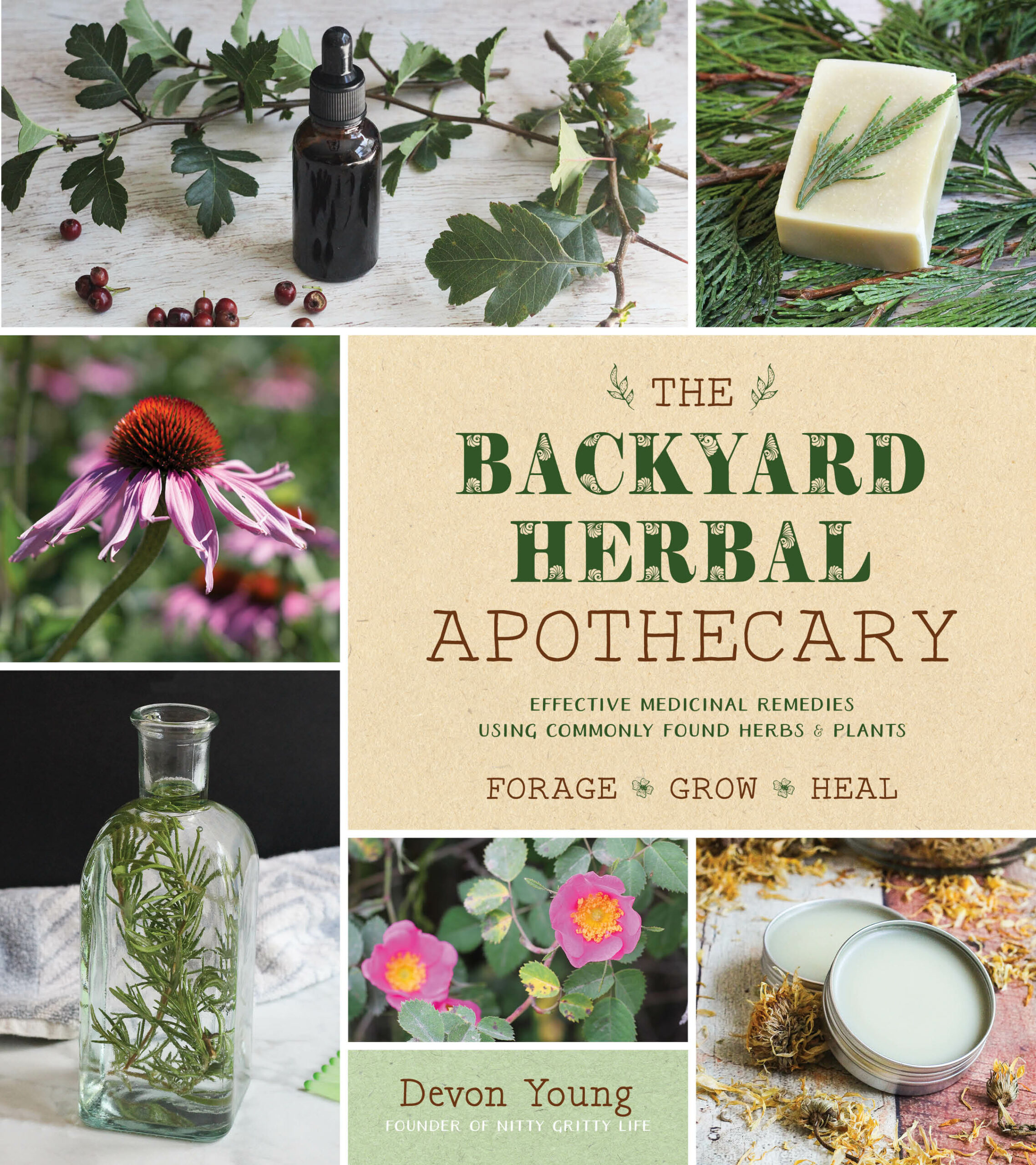
I was so happy to find this recipe for a natural violet leaf skin cream in the book

Backyard Herbal Apothecary cover

Reprinted with permission from The Backyard Herbal Apothecary by Devon Young. Page Street Publishing Co. 2019. Photo credit: Devon Young.

Violet Herbal Monograph

  • Common Names: viola, pansy, Johnny-jump-up, heartsease, kiss-me-at-the-gate
  • Latin Name: Viola odorata, V. sororia, V. tricolor, V. papilionacea

    There are over 50 species with some degree of interchangeability.
  • Herbal Energetics: cool/moist
  • Therapeutic Actions: alterative, analgesic, anti-inflammatory, antiseptic, demulcent, diuretic, laxative, lymphatic, nervine, nutritive, purgative (roots and seeds), sedative, tonic
  • Parts Used: leaf, flower

If there ever was a flower more fabled than the rose, it is most certainly the violet. As school children, violet entered our lexicon as “roses are red, violets are blue.” It is often seen as a flower associated with Valentine’s Day imagery, and some of its common names refer to stolen and secretive kisses. A Greek myth tells that Zeus provided a field of violets for his lover to graze after he turned her to a white heifer to save her from the jealous wrath of Hera. In Roman mythology, we learn that Venus beat a few fair maidens blue and turned them into violets upon her son Cupid’s declaration that the maidens were more beautiful. Early Christians held that violets once pointed their countenance to the sky, but after the crucifixion, the flowers nodded to the ground in despair. In an interesting dichotomy, Christianity sees the flower as a symbol of modesty and humility, while more pagan cultures often associate violets with jealousy, sex and love/lust. Whatever the symbolism, violets are revered. Perhaps even greater than violet symbolism is the vast medicinal application of this precious botanical.

Although the fragrant “sweet violet” (Viola odorata) is most often touted in herbal repertories, there are many species of the Viola genus, known as “violets” and their associated common names—which are practically as abundant as the members of the violet family. Most can be used interchangeably; edibility and palatability may differ among the species. Some sources indicate that wild, yellow flowering species are “soapy” and undesirable due to a high saponin content. Yet, most common members of the Viola hold similar medicinal value—meaning that your cultivated potted plants may be just the remedy you are looking for, assuming that they are free of contamination.

Violets are the great soothers of the plant world, gently encouraging flow and movement of internal fluids. Most often the leaves and flowers are used in combination. This botanical is often used in cough remedies. Being demulcent and lymphatic, it is particularly useful for hot, dry conditions of the throat, coupled with hard, painful lymph glands under the jaw. I think of violets when there are complaints of pain and difficulty swallowing, irritable, dry cough and palpable nodules along the neck. Similarly, violets are often suggested to soothe ulcerations of the mouth and esophagus.

Violets

Chief among violet’s many virtues is as a profound lymphatic. This is easily observed in the lymph tissues around the neck, but violet seems to have a particular affinity for the axillary (armpit to breast) and groin nodes as well. The lymphatic system does not have autonomous circulation, thus requiring movement and manual manipulation to circulate. Herbs such as violet are an excellent remedy to increase lymphatic drainage and soften hardened nodes. As it pertains to breast health, violet helps to soften fibrous breast tissue and cysts when combined with a gentle massage of concerning areas. Moreover, there is even some science to indicate that violet may have some anticancer potential. A 2014 study successfully demonstrated inhibition of activated lymphocyte cell proliferation using an aqueous Viola tricolor extract. Another 2017 study suggests that Voila odorata may have anti-melanogenic properties which show promise in the area of skin cancer research. While clearly these small studies do not constitute a “cancer cure,” they do offer new and interesting potential for this botanical.

Violets are often overlooked as a nutritive tonic. They are abundant in vitamins A and C, rich in minerals and contain a phytonutrient known as rutin, which is associated with strengthening blood vessels—perhaps evidenced in the common name “heartsease.” Violets, prepared with other alterative herbs such as chickweed, nettle and dock, will help the liver to purge excessive toxin buildup and recharge the batteries of a sluggish circulatory system.

Slightly sedative and analgesic and abundantly nervine, violets are often suggested when tension is associated with pain and irritability. Tradition suggests that violets placed about the head relieve headaches. Consumed as a tea with other nervine herbs, violet can promote calm and clarity, without making one overly sleepy.

Violet is often called for when constipation with dry, hard stools is a complaint, due to the softening, lubricating effects of its mucilage, an insoluble fiber not unlike that of oatmeal. It is a gentle laxative that one can try before resorting to stronger herbs that often cause cramping. The seeds and roots of violet are thought to be purgative and emetic, so use with proper caution, if at all.

Best Violet Herbal Preparations

Violets lend themselves to a variety of preparations.

Leaves and flowers are often dried and used in teas and infusions, ground to a paste for a poultice and tinctured in alcohol or vinegar. Vinegar is especially good for drawing out minerals and, when combined with honey, can be a tasty oxymel.

Violets can be simmered with water and sugar to create a flavorful syrup that is perfect for relieving a cough or, mixed with sparkling water, for an herbal treat.

Oils can also be infused with violets for salves, creams and massage bases.

Violets are also edible.

The greens have a bland flavor somewhat similar to spinach and can be used in salad or even in soups where it acts as a milk-thickening agent. Violet flowers are very decorative, and they are often seen crystallized and topping worthy confections!

Backyard Herbal Apothecary violet cream

Herbal Substitutes

Marshmallow (Althea officinalis): mucilage

Blue vervain (Verbena hastata): tension

Safety and Precautions

Violets are largely considered safe, even while pregnant or nursing. Be advised that larger doses are purgative and laxative, so consume in reasonable amounts.

Violet Look A-Likes

Vinca (Vinca sp.), lesser celadine (Ficaria verna) TOXIC in large amounts

Identify and Grow Violets

Type of Plant: Perennial (sometimes annual) L

Habitat: Violets prefer partial shade and moisture-retentive soils. They are generally found in wooded areas and shady lawns. In certain situations, violets may be spotted in sunnier locations, but they are intolerant of extreme heat and often wilt mid-summer in such areas. Cultivated varieties, frequently referred to as pansies, can be spotted in garden centers as early as late winter.

Height: 6–10″ (15–25 cm)

Leaf: Simple, basal or alternate depending on species; palmate leaves with a “scalloped” margin, often heart-shaped to kidney bean–shaped

Stem: Flowers arise on leafless stalks

Flower: Violets appear most often in shades of blue-purple and variation on the theme such as white and blue stripes, although white and yellow wild varieties exist. All violets are irregular flowers with five petals, stamens and sepals each. Cultivated pansies can be splashier in color, often with yellow centers. Interestingly, the early spring flowers are sterile; it is a second, rather unnoticeable, flower that produces seed.

Seed: Seeds are mature in late summer to early fall in three-valved capsules.

Growing Information: Violets grow well in moist, moderately shady areas. Violets can be propagated by root division or will often freely reseed when healthy and established.

Forage or Grow? Violets are easy to grow and easy to identify. Even cultivated varieties have medicinal value. So, this one is a toss up. Forage and grow perhaps— one can.

Harvesting flowers and leaves can be done easily with a pair of scissors, and the plant can benefit from a gentle harvest. Think of it like giving the violets a haircut. Do note that some native violet species are currently considered threatened and should not be harvested, especially when so many other options exist.

Backyard Herbal Apothecary violet cream
Ashley Adamant

Violet Skin Cream

One of the most vital actions a woman can take for her health is to preform regular breast exams. Vigilance leads to early detection and treatment of lumps and other abnormalities. This violet breast cream is designed for everyday use. That’s right. I said every day. Applying this cream daily encourages familiarity with one’s own breasts and how they may change and feel different throughout each cycle.

Violet promotes good lymphatic health and is thought to dissolve cystic tissue over time, and the rich oils included in the cream nourish and increase resiliency in the skin. This cream can also be used to address hardened lymph nodes in the underarm, groin and along the neck for both women and men.

If no essential oils are included in this blend, it is safe for nursing mamas and babies. Since this cream contains some water but no chemical preservative agent, it should be stored in the refrigerator between uses.
Print Recipe Pin Recipe
Ingredients Method

Ingredients
  

  • 2 tbsp 6 g dried violet leaf and flower, divided
  • 8 oz 240 ml water
  • 2 tbsp 30 g coconut oil or oil of your choice
  • 1 tbsp 15 g cocoa butter
  • 1 tbsp 12 g emulsifying wax pastilles
  • 12 drops chamomile essential oil optional

Method
 

  1. Make a violet infusion by infusing 1 tablespoon (3 g) of dried violet in 8 ounces (240 ml) of water just off the boil. Infuse for 20 minutes, then strain. Set aside 3 to 5 tablespoons (45 to 75 ml) of this infusion for the purposes of this recipe.
  2. Using the double boiler method, infuse the coconut oil and cocoa butter with 1 tablespoon (3 g) of violet.
  3. Strain the infused oil through a fine-mesh sieve and return to the double boiler. Add the emulsifying wax and optional essential oil, and heat just until the wax is melted.
  4. Remove from the heat, and set aside. Meanwhile, adjust the temperature of the violet infusion to within about 10 degrees of the oils. In a small blender or with a handheld beater, slowly pour the reserved violet infusion into the oils to emulsify.
  5. Spoon or pipe into a 2-ounce (60-ml) container.

    Apply using a sweeping motion from the underarm, around each breast and up the chest wall, and/or on the underarm, groin and neck. Use generously and make a new batch every 2 weeks. Refrigerate between uses.
Violet Skin Cream for Lymphatic Health

Filed Under: Herbal Medicine, Herbalism

Primary Sidebar

Meet Ashley from Adamant Living

Ashley Adamant Author Bio

Adamant Living is all about giving you the tools and resources to live your very best life!

My goal is to encourage you to focus on quality over quantity, and strive to strive for a healthy, all-natural lifestyle. Read More...

Recent Posts

  • Gardening By the Moon: Using the Moon Phases to Guide Your Gardening
  • Full Moon Names: Why They Exist and Why They Matter
  • Shampoo Bar Recipe: How to Make Shampoo Bars at Home
  • Herbal Under Eye Cream with Wild Rose
  • Herbal Smudge Sticks with Mugwort and Lavender

Footer

Adamant Living is a personal blog and a woman-owned small business.  I am a participant in the Amazon Services LLC Associates Program, an affiliate advertising program designed to provide a means for sites to earn advertising fees by advertising and linking to Amazon.com. For more details, visit my disclosures page.

Copyright © 2026 · Foodie Pro Theme on Genesis Framework · WordPress · Log in